
Almost every couple we sit with hits a money-shaped wall at some point. Not because they don’t earn enough — many earn plenty. The wall is rarely about the numbers. It’s about the meaning.
What money carries in our context
In African families, money is never just money. It’s filial duty — the parents who paid your school fees and whose old age is now your responsibility. It’s social signalling — what success has to look like for the village WhatsApp group. It’s pride — particularly for men, whose worth is still routinely measured by what they provide. It’s fear — for women whose financial autonomy is one generation old at most.
Two people bring all of that to a marriage. They rarely talk about any of it explicitly. And then the credit-card statement arrives, and the conversation that follows is about R-and-cents — but the fight is about everything underneath.
How couples who get free do it
In our work, the couples who reach financial peace tend to do four things, in some order:
- They name their money story out loud, to each other. What money meant in your family of origin. What you were taught. What you were ashamed of. What you swore you’d never repeat. This is the foundation conversation; everything else is built on it.
- They make the obligations explicit. The aging parents, the school-fees nephew, the village contribution. Not to argue them away — to put them on the same page so they stop being a source of secret resentment.
- They build small autonomy alongside the joint plan. A protected portion of each partner’s earnings that they don’t have to justify. Not a secret account — an agreed-upon zone of freedom. Counter-intuitively, this strengthens the joint plan rather than weakens it.
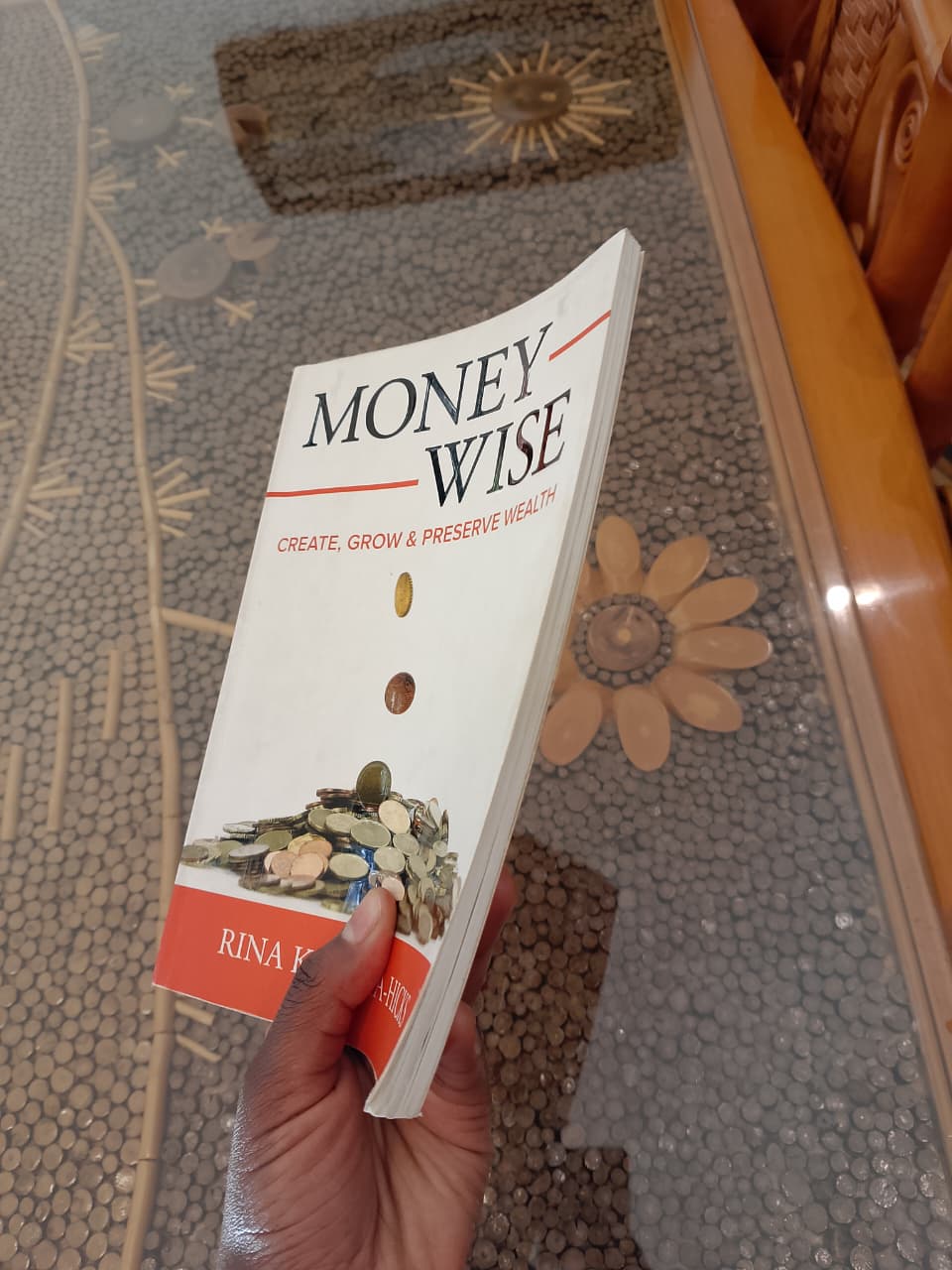
- They read Money-Wise together. Or some equivalent. The point isn’t the book itself — it’s that they develop shared language and shared frameworks. Most couples have never had a financial conversation in the same vocabulary.
When to bring help in
If money keeps coming up as a recurring fight, if one of you feels controlled or controlling, if either of you is keeping a secret — those are signals to bring a third person into the conversation. Our couples therapists work specifically with the money-and-marriage intersection.
And if you’d rather start solo — for the financial-literacy piece first — Money-Wise by Rina Karina-Hicks is in our shop. It was written for exactly this conversation, with East African households in mind.
Want to walk this with someone?